Types of moving image production (Media forms)
Key - (link to a website), (Part of a bullet-point list with additional explanation),(Subheading), (Part of a list)
(Questions)
Key - (link to a website), (Part of a bullet-point list with additional explanation),(Subheading), (Part of a list)
(Questions)
The type of media product that our group produced was a short film for the website DepicT! and its 90 second competition or new media as it’s also known. The short film (Titled: Internet Blues) was then distributed to our audience through the Btec Youtube channel for our college. The video can be watched by clicking here.
Title card from the short film "Internet Blues"

In addition to a short film I helped produce; there are many different types of moving image media products.
These include:
- Animation (A different kind of movie, such as a short film)
- Feature length (Fiction/Non Fiction)
- TV Programms (Such as News, Soap operas, , comedies, etc.)
- Advertisements
- Music Videos
- Film trailers
These different types of media all have various distribution methods (the way in which the audience receives the content). For example, TV is a platform in which advertisements and film trailers can be broadcast to its target audience. Below are some more examples of distribution.

Finance and sources of funding
There are many sources of funding for a film or other moving image pictures. For example films and other such media can be funded by a Kickstarter campaign (or Indy go-go). These rely on public donations, with the donations normally being rewarded with a physical copy of the film for example depending on what you paid. In addition these campaigns normally have a certain goal to reach, for example £25,000. If they go over, that money can be put into adding extras. Below are some more examples of finance and sources of funding.


Shooter and Google Maps (2007) - In this action movie, which stars Mark Wahlberg FBI agents are downgraded to using Google's free web tool to track a deadly rogue assassin.
Green Lantern and Hot Wheels (2011) - Although the clip shown below is an advertisement that was aired when the movie was being played , the actual clip of the Hot wheels looking car was used in the film. Not only that, but you could go out and buy a replica of that car for your children after leaving the Cinema.
The money gained though one or various ways, as listed above will be spent on things that the moving image text will require such as:

For our short film however, our group didn't need to splash out cash in any shape or form. However some of the props we did use cost the college money such as the 2 sticky notes we used as well as the tripod and actual camera we shot with.
Requirements for our DepicT! film
What we had to obtain for our depict project -
Personnel:
These are the "talent" (Actors) and crew (the production team) that work on a production. The "make up" (as in who makes up the team for the production). Their skill levels and also past experience will determine how much they charge an hour for example and also how professional they will be in terms of acting for example. More skilled and experienced personnel will most likely be hired for larger and more expensive projects (Hollywood blockbusters such as "The Expendables"). While less experienced personnel may land a job on a TV programme for example or a few short films. However there may be some exceptions to this as TV film crews may take on an apprentice.
Low budget short - A few personnel, these few people will most likely take all the tasks that need to be completed, such as act and edit for example. These personnel may be starting out in the industry for the first time so their skill level would be limited.
A Television Programme - Many actors, these may also play the role of various extras seen in the background of the show. In addition a fairly large production team including costume and set designers.
Hollywood Feature film - Large production team, including key stars, stunt crew, catering for example. This team would also be global as the film will most likely be shot in various places around the world (Example: James bond) or even shipped to shops around the world (DVDs/Blu-Ray).

Allocation of work in our group
We allocated work on the fly, depending on if someone was already working on something within the project or not. However for the camera work and editing, we all helped direct the film as well edited the short.
This also included sharing the work on the Pre-production paper work. In addition I had some experience working on projects that were similar, this was because I had done work on a FRANK(anti-drug organization) ad. However I had no previous experience doing the paper work. Lastly, the rest of the group had no previous on either editing or Pre-production paperwork.
Cast and other contributors to the production of a media text
- Consultants: There are different types of consultants such as internet consultants who help to promote the project online (if it’s a big Hollywood production mostly). In addition media consultants work to gain press coverage, working on a promo campaign working with artists to make posters for example.

- Researchers: Find out what’s hot right now, this helps to communicate with viewers/consumers of the media product. This helps with advertising the film and getting the word out there about its release date for example. In addition researchers can help with a historical documentary or a film that uses a certain time period. These researchers make sure that everything in the film is close to accurate in terms of costume, location or even set design.

- Make Up/Costume design: Make sure that the actor’s look their best on screen or sometimes their worst depending on what type of character they are playing as. Costume designers have the task of making/finding cloths that fit the actors roles and also perhaps the time period that the movie is set in.

- Studio executives: A studio executive can be a Chief executive officer or a Chief financial officer or a Chief operating officer. Execs can also be a vice president such as a senior vice president of corporate relations. Executives may oversee production of the film.

- Script writers: Script writers kick start the whole process, even though that in the media directors are the ones getting press and attention, its script writers who deserve as much credit, only difference is that writers do not handle the press as well as directors. Script writing is seen more of a plan, rather than traditional writing of a play or book for example.

Time-frames in Media
- What would happen if you do not meet the deadlines in the professional media industry?
Not meeting set deadlines in a professional environment can many various problems ranging from costing loads of money to a release set back. In addition the actors needed for the parts that you may have yet to shoot or need to re-shoot may have other commitments that would get in the way, thus delaying the film further or putting the project in jeopardy. Not meeting the deadlines can also cause your reputation as a filmmaker to be damaged, making people not want to work with you as you can’t meet set times;this is a big deal in the industry.
- Did we meet the deadlines set for our DepicT! project?
We met the deadlines that were set in class, this includes both the Pre-production paper work and also the shooting and editing, however we had to rush some of the filming to get it done on time.
Equipment/Facilities
- How do you obtain equipment in professional moving image productions?
Normally equipment can be obtained through a facility house by contacting them via email or by phone. The website I have picked to act as an example for this is Prokit. Prokit claim to be the "UK's largest professional video production equipment showroom". In addition they offer its customers an extensive "range of broadcast and professional video production tools", in addition being Sony professional solutions experts, they also are an importer and also a distributor of media related brands. Below is some of their prices for different types of media related equipment.

Cost to buy:
Three Chip Camcorders
These are professional camcorders that offer full manual control. These are ideal for web documentaries for example and are broadcast approved.
- Streaming websites such as Hulu or Netflix (These can be used on games consoles, TV and on the internet)
- Film festivals (Normally where films are premiered before theatrical release)
- Torrent sites such as Pirate Bay for example (Some music artists have teamed up with the sites, to either promote a new album or give away free content such as videos)
- Physical packaging (DVDs, Blu-rays)
- Theatrical release (Cinemas)

Finance and sources of funding
There are many sources of funding for a film or other moving image pictures. For example films and other such media can be funded by a Kickstarter campaign (or Indy go-go). These rely on public donations, with the donations normally being rewarded with a physical copy of the film for example depending on what you paid. In addition these campaigns normally have a certain goal to reach, for example £25,000. If they go over, that money can be put into adding extras. Below are some more examples of finance and sources of funding.


- College/School (While these are small, they help with making simple short films for a project for the course, for example our DepicT! budget was a maximum of £5)
- Private Financing (Sometimes actors or company's help with the cost of making a film)
- An Example of Private Financing
Life of Brian - 4 million pounds of its budget came from former Beatles member George Harrison who put up the required sum after John Goldstone turned the production down a mere few days before shooting would have begun. For his help Harrison was given a small cameo in the film.

- Product placement (These help to make money after the film has been released normally. An example could be James bond drinking a Heineken beer)
- Examples of Product placement
Shooter and Google Maps (2007) - In this action movie, which stars Mark Wahlberg FBI agents are downgraded to using Google's free web tool to track a deadly rogue assassin.
Green Lantern and Hot Wheels (2011) - Although the clip shown below is an advertisement that was aired when the movie was being played , the actual clip of the Hot wheels looking car was used in the film. Not only that, but you could go out and buy a replica of that car for your children after leaving the Cinema.
- Self-finance (Normally for short films and low budget titles)
- Examples of Self-finance
Writer-director Peter Stylianou - Started out making a few shorts but always had an idea of a feature film. He help to produce "Who needs enemies" a gritty thriller in the style of Guy Ritchie which was shot entirely by his production company Red Guerilla Films for just over £10,000.
Michael Bay - In addition to Peter stylianou, another film maker who wishes to make moves from there own pocket is Bay. He has expressed interest in self-financing a Horror film in the near future and says he has always had a great fantasy about directing such a movie. More information can be found by clicking here
- Advertisement, Youtube and Television (Advertisers buy slot times to show there adds during the break on TV for example. On Youtube advertisements are seen before the video and sometimes in the middle, these help generate revenue for that channel and also Google)
- Lottery funding from the BFI (British Film Industry)
- Example of Lottery Funding
Fish Tank (2009) - Written and directed by Andrea Arnold, Fish Tank went on to win the Jury Prize at the 2009 Cannes Film Festival. It was funded by BBC Films and also by the UK film council who allocate the lotto funding.
- Money from the production company (For example when making a film Sony have access to most of its budget of the company)
The money gained though one or various ways, as listed above will be spent on things that the moving image text will require such as:
- Catering
- Location Hire/Scouting
- Transport
- Accommodation
- Crew
- Editing personnel (Special effects for example)
- Stunt coordinators/Performers
- Extras
- Make up department/Costume designers
- Equipment hire

For our short film however, our group didn't need to splash out cash in any shape or form. However some of the props we did use cost the college money such as the 2 sticky notes we used as well as the tripod and actual camera we shot with.
Requirements for our DepicT! film
What we had to obtain for our depict project -
- Equipment (Board-pen, Sticky notes, camera, tripod, memory card)
- Extra actors
- Permission to film in the location we picked
- Pre-production paper work (Recces, talent release forms, etc.)
Low budget short - A few personnel, these few people will most likely take all the tasks that need to be completed, such as act and edit for example. These personnel may be starting out in the industry for the first time so their skill level would be limited.
A Television Programme - Many actors, these may also play the role of various extras seen in the background of the show. In addition a fairly large production team including costume and set designers.
Hollywood Feature film - Large production team, including key stars, stunt crew, catering for example. This team would also be global as the film will most likely be shot in various places around the world (Example: James bond) or even shipped to shops around the world (DVDs/Blu-Ray).

Allocation of work in our group
We allocated work on the fly, depending on if someone was already working on something within the project or not. However for the camera work and editing, we all helped direct the film as well edited the short.
This also included sharing the work on the Pre-production paper work. In addition I had some experience working on projects that were similar, this was because I had done work on a FRANK(anti-drug organization) ad. However I had no previous experience doing the paper work. Lastly, the rest of the group had no previous on either editing or Pre-production paperwork.
Cast and other contributors to the production of a media text
- Consultants: There are different types of consultants such as internet consultants who help to promote the project online (if it’s a big Hollywood production mostly). In addition media consultants work to gain press coverage, working on a promo campaign working with artists to make posters for example.

- Researchers: Find out what’s hot right now, this helps to communicate with viewers/consumers of the media product. This helps with advertising the film and getting the word out there about its release date for example. In addition researchers can help with a historical documentary or a film that uses a certain time period. These researchers make sure that everything in the film is close to accurate in terms of costume, location or even set design.

- Make Up/Costume design: Make sure that the actor’s look their best on screen or sometimes their worst depending on what type of character they are playing as. Costume designers have the task of making/finding cloths that fit the actors roles and also perhaps the time period that the movie is set in.

- Studio executives: A studio executive can be a Chief executive officer or a Chief financial officer or a Chief operating officer. Execs can also be a vice president such as a senior vice president of corporate relations. Executives may oversee production of the film.

- Script writers: Script writers kick start the whole process, even though that in the media directors are the ones getting press and attention, its script writers who deserve as much credit, only difference is that writers do not handle the press as well as directors. Script writing is seen more of a plan, rather than traditional writing of a play or book for example.

Time-frames in Media
- What would happen if you do not meet the deadlines in the professional media industry?
Not meeting set deadlines in a professional environment can many various problems ranging from costing loads of money to a release set back. In addition the actors needed for the parts that you may have yet to shoot or need to re-shoot may have other commitments that would get in the way, thus delaying the film further or putting the project in jeopardy. Not meeting the deadlines can also cause your reputation as a filmmaker to be damaged, making people not want to work with you as you can’t meet set times;this is a big deal in the industry.
- Did we meet the deadlines set for our DepicT! project?
We met the deadlines that were set in class, this includes both the Pre-production paper work and also the shooting and editing, however we had to rush some of the filming to get it done on time.
Equipment/Facilities
- How do you obtain equipment in professional moving image productions?
Normally equipment can be obtained through a facility house by contacting them via email or by phone. The website I have picked to act as an example for this is Prokit. Prokit claim to be the "UK's largest professional video production equipment showroom". In addition they offer its customers an extensive "range of broadcast and professional video production tools", in addition being Sony professional solutions experts, they also are an importer and also a distributor of media related brands. Below is some of their prices for different types of media related equipment.

Cost to buy:
Three Chip Camcorders
These are professional camcorders that offer full manual control. These are ideal for web documentaries for example and are broadcast approved.
CANON XF300 HD CAMCORDER - Price Inc VAT: £3,780.00

SONY PMW-150 CAMCORDER - Price Inc VAT: £4,866.00

SONY PMW-150 CAMCORDER - Price Inc VAT: £4,866.00

Lighting
CHIMERA LED LIGHTBANK - Price Inc VAT: £163.20

PROKIT SATURN LED LIGHTING KIT - Price Inc VAT: £2,034.00

Tripods
Miller Arrow 55 - Prices from Inc VAT: £4,118.40

Sachtler Ace M - Prices from Inc VAT: £468.00

Nearest equipment facility to the college -
EpicTV - While they don't have a equipment hire service, they do however offer editing facilities.
White Label Media Solutions - Offer equipment hire and also personnel hire to help with your media production. White Label are based in the center of Norwich.
- What equipment was available for our DepicT! Project?
We had tripods and different types of cameras on offer to us for the production of the short. We also had Macs loaded with Premiere Pro for our editing needs. We obtained this equipment by renting it out from the colleges AV room with our student cards.

Locations
Location Recces - Are useful for scouting out possible locations for the shoot to see if it would fit the narrative of the media production.
Location Release - This is legal permission for the particular shoot to go ahead at the desired location. These are used for example if the shot takes place outside with members of the public.
Why we picked the locations that we used for our DepicT! Project
Location 1 - The classroom

We picked this location as it had a perfect desk with 2 computers on it, something which was key for our story to work the way I wrote it. In addition the classroom also contained a white board, something that was key for our "Josh wall" part which was a nod at Facebook. We obtained this location by asking the teacher during the lesson if we could shoot here.

Location 2 - The hallway

We picked this location as it fits the particular part of the film we needed it for. In addition the corners in the hallway fit the production well as it gave us the opportunity to add a new scene we had not previously written in the script.
Logistical issues we faced during the shoot
- Filming outside of the classroom - This was an issue because people where sometimes walking in the way of the camera, preventing us from getting a decent take done. There were also some health and safety issues, this could have been down to any hazards such as wet floors for example. But we made sure that the area was clear before shooting.
- Filming the clock - This was an issue as it could have eaten up a decent portion of time getting the shot done, however we were able to get this done during break, away from the actual shooting time.

- Limited amount of sticky notes - Only had 2 sticky notes, so we had to get the shot right first time to avoid wasting any of the prop.
- Shooting in the classroom - We had to make sure that the class room was free to use for the shoot, so that we had less background noise during the actual takes. We did this by using the room when it was empty or making sure everyone was quiet when the shot was happening.

- Possible risk with end scene - In the death scene the character falls over and dies. The falling over part may come with a health and safety risk as the character falls over on hard ground. We made sure that he did not fall far and didn't land to hard either.

Materials
Materials you may need for a production
- Props - Can be obtained through donations or be brought by the production company. In addition these can be obtained by renting them out from a facility warehouse such as Prop Store for example. Places such as Prop store offer original Props or replica Props that were used in other films, these can be secrets placed in the film (Easter eggs) by the director for the fun of it or can be made to show a character is a fan of something (e.g. shows characters interests).

- Music (Soundtrack) - Can be licensed from various artists as part of a licensed soundtrack, which then might be packed up and sold on iTunes for extra profit. Or made by composers that will work along side the production team to create music that is specific for that movie (helping to enhance a particular scene for example). Lastly a soundtrack for a short film for example can be acquired through royalty free music sites such as Incompetec which allow users to use its music for free, although donations are welcomed. These can be used free of charge if the writer of a particular piece is given credit.

- Costumes - Can be brought for the production or made by fashion designers. In addition designers can be brought on to aid the production team, helping to create unique looking cloths for that character or can also consult and chose outfits that maybe fit a a particular characters demeanor/mood on screen.

- Catering (Food/Drink) - Brought or can be supplied by vendors or by being sponsored by a particular food company. Alternatively catering services can be provided on location from certain company's such as Wild Cuisine who can provide for up to a 350 people crew for example.
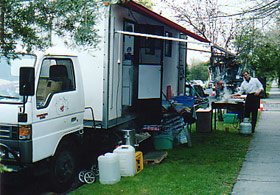
- Interiors (Carpets, paintings for example) - Can be built by on site builders (these can be hired to design a set that is used specifically for that film) or can simply be acquired by renting out the location. These can also be altered on sight with the help of consultants

- Script - Can be written or typed by one or many people. Additionally script writers can be hired to help with the making of the script (A website like Industrial Scripts offers services that can help out in fully realizing someones idea). Also the script may be read by historical consultants (if the movie is set in the past for example), this may help to keep out inaccuracies in the script. For factual program's very old newspapers and letters can be obtained from the library archives, these can give inspiration to the script writer and also help to maintain realism in the film. An example of this can be found from writer Ronan Bennett who wrote "The Hamburg Cell", his research consisted of various interviews for example.

Financial considerations
- Renting/Buying of props - Need to get insurance for them so that if they break it does not cost loads to get a replacement
- Get the right equipment for the job - You don't want to be spending money on equipment that maybe is not suitable for the job at hand, this may lead to the equipment breaking and having to find a replacement for example.
- Locations are actually needed - Moving the crew and setting up again in a new location can be costly and time consuming, sometimes filmmakers use the same country that they are filming in to create new sets and maybe make it look like a new country/place.
Legal Considerations
Legal considerations when using certain materials in a media production
Sometimes legal problems occur when using certain things such as a trademarked logo for example. These can cost money or can even get the filmmakers sued. Below is some examples of legal considerations
- Copyrighted Music - When the music used has not been through proper legal clearance to be used for that production. This can be a time consuming and costly affair.
- Copyrighted Logos/Slogans - Pretty much the same as copyrighted music, this can take ages to clear and will most likely cost money to use in film, unless the company is sponsors the film. Films will sometimes get around this by creating their own in the film world.
- Likeness - If one of the characters is based off a certain character or person without proper consent.
- Makes/Designs - For example car models or phones, these have to be paid for when you see them on screen
Copyright

Copyright basically means the ownership of an intellectual property, an example of this is similar to the deeds to a house define ownership rights to that who owns the deeds in the first place. Copyright protects creators or owners of the rights to something that is a creative work. It does this by outlining what the person or persons who hold the Copyright can do or not do with it. It also helps to prevent other people using that particular copyright without the permission of the holders in the first place. Copyright is a global concept; however it is interpreted differently in different parts of the world that have other jurisdictions. Great care is used to protect the copyright holder in every country where there material might be used in.
Many lawyers are used when creating copyright in the film sector, copyright is used in these forms of film:
Many lawyers are used when creating copyright in the film sector, copyright is used in these forms of film:
- Musicals - soundtrack, including lyrics
- Broadcasts and cable usage - for the sale and showing on TV
- Performance - Any live interpretation of the film
- Artistic - for example the sets used in the film
How did copyright affect your DepicT! production

Copyright affected our music choice in the project as we were going to use some background music that I would have provided. In addition copyright could have affect out film if it was shown to a wider audience as we have 2 logos that appeared in the film, these were the Adidas and Apple computers.
Clearance - Legal permission to use that particular piece of media content. For example if a film wanted to utilize a certain piece of music, the production team would then have to get permission to use that piece from its creators and also record label. However if the music is royalty free, then it is free to use without having to gain permission to use it. This clearance also applies to people who wish to use video clips of films or games in there film. Clearance not only covers film and TV but also has become a part of the internet, for example users on YouTube cant take a full album and post it up on their personal channel and make money from it without proper clearance, or the video may be taken down or the audio will be muted (seen in music used in gaming montages for example).
Public Liability Insurance - Makes sure that actors for example, don't sue over an injury while on your film set, an example could be someone slipping on a wet floor. Public Liability Insurance is designed to pay compensation, this can include loss of earnings, future loss of earnings or any damage that you might have caused, this can also include members of the public if you are filming on location. This insurance mainly covers:
- Damage to property
- Bodily Injury to any person

- Accidents on movie sets
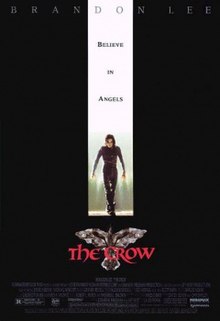
1. Brandon Lee - The Crow (1994) - Brandon Lee was killed when a Prop gun fired and a real bullet cane out, hitting Lee in the abdomen. Nobody knew that there was a real live bullet in the gun at the time.
2. David Ritchie - Jumper (2008) - Ritchie was struck down by falling debris that had been made for the set of the film. This cause him to be crushed under the weight of the debris

Completion guarantee/insurance - This is a form of insurance often used in interdependently financed films to guarantee that the film will be completed on a certain date for example. On completion the producers of the film receive a pay-out.
Regulation
A regulatory body is a public authority or even a government agency. These agency's make rules and also make sure that everyone is following them in the context (e.g. people within the media production world follow the guidelines) also known as a office of communication.
- What is OFCOM? And what is its function?

OFCOM is an independent regulator for the UK communications industry. It has a wide amount of powers across television, Radio, Phones and also the postal service. It has a duty to represent the citizens/consumers of the UK.
- Who regulates the BBC? And why is this different to OFCOM?
The BBC are mostly overseen by the "BBC Trust" and also managed by the "Director General". A Director General is appointed by a board. In addition the BBC is also overseen by the media regulators. This is different from OFCOM as that is a government owned agency whereas the BBC is owned and funded separately by the public and TV licensing fees.
A regulatory body is a public authority or even a government agency. These agency's make rules and also make sure that everyone is following them in the context (e.g. people within the media production world follow the guidelines) also known as a office of communication.
- What is OFCOM? And what is its function?

OFCOM is an independent regulator for the UK communications industry. It has a wide amount of powers across television, Radio, Phones and also the postal service. It has a duty to represent the citizens/consumers of the UK.
- Who regulates the BBC? And why is this different to OFCOM?
The BBC are mostly overseen by the "BBC Trust" and also managed by the "Director General". A Director General is appointed by a board. In addition the BBC is also overseen by the media regulators. This is different from OFCOM as that is a government owned agency whereas the BBC is owned and funded separately by the public and TV licensing fees.
- What is the BBFC and what is its function?


BBFC stands for the British Board of Film and Classification. The BBFC gives out age ratings on films. In addition the BBFC is an independent, non-Government body. It was set up in 1912 and has been giving out ratings to video and DVDs since 1984.
Regulation of moving image productions distributed via the internet.
For starters, OFCOM only has control on material that is broadcast over an analogue or digital TV signal but not streaming sites such as Netfilx for example. However these websites are self regulated by a group known as "The Association for Television on Demand" (TATD). TATD`s code mirrors that of OFCOM. Although online videos are much harder to actually regulate because of the fact that anyone in the entire world with access to the internet can upload footage. However the way to get around this fact, is to use systems that can detect certain types of footage and let the administrators know of them. An example of this can be seen in how Youtube does not allow pornography, violence or dangerous acts to be shown on its site.

There is not any official regulation as such on the web, however most material that breaks certain laws here in the UK is uploaded from places where it is hard to Police any actual law. Some preventions are being made however, such as the European Union updating its laws and legislation regarding audio visual broadcasts. This will contain measures that will safe guard children from sex and violence, while also setting limits on advertisement. A big problem with this is that it was scaled back to just include "TV and TV like services" (Netflix, Lovefilm etc.) instead of all new media forms. Internet videos will then be unchanged by this and will still contain content that might be considered offensive and indecent.

When it comes down to it though, most people should really look into self-regulation. This is the method in which the parents or guardian of the child block certain websites from being viewed on a particular computer. A method of self-regulation can be seen in our very own college due to how the college blocks sites that may contain harmful or obscene content. This can also be achieved by adding certain filters on your desired web browser.
In terms of online video regulations, the UK Government does not want to get involved and has argued against regulation of the content saying that they "did not want to stifle new media industries". An example of this can be seen in if a European version of Youtube opened up, it would be already at a disadvantage compared to its US counterpart, as there are no such regulations on the content that they show. Streaming Websites are however doing a decent job so far, for example programs that air after the 9pm watershed can be viewed by people on the website at any time, so the websites will now put an icon "G" for Guidance. They will have you sign up and not let you watch the content unless you are 18 or older as well.

There is not any official regulation as such on the web, however most material that breaks certain laws here in the UK is uploaded from places where it is hard to Police any actual law. Some preventions are being made however, such as the European Union updating its laws and legislation regarding audio visual broadcasts. This will contain measures that will safe guard children from sex and violence, while also setting limits on advertisement. A big problem with this is that it was scaled back to just include "TV and TV like services" (Netflix, Lovefilm etc.) instead of all new media forms. Internet videos will then be unchanged by this and will still contain content that might be considered offensive and indecent.

When it comes down to it though, most people should really look into self-regulation. This is the method in which the parents or guardian of the child block certain websites from being viewed on a particular computer. A method of self-regulation can be seen in our very own college due to how the college blocks sites that may contain harmful or obscene content. This can also be achieved by adding certain filters on your desired web browser.
In terms of online video regulations, the UK Government does not want to get involved and has argued against regulation of the content saying that they "did not want to stifle new media industries". An example of this can be seen in if a European version of Youtube opened up, it would be already at a disadvantage compared to its US counterpart, as there are no such regulations on the content that they show. Streaming Websites are however doing a decent job so far, for example programs that air after the 9pm watershed can be viewed by people on the website at any time, so the websites will now put an icon "G" for Guidance. They will have you sign up and not let you watch the content unless you are 18 or older as well.
_0.jpg?itok=TqXRnIS8)
What we have learned about the Internets regulation and how this might have affected our DepicT! project
This did not really affect our overall project as our plan was to not really include any harmful or obscene content. However at the end scene we were planning to have the character cough up numbers, this might have been seen as tasteless and might have made people ill (due to the character being sick).
Trade unions and trade associations
- What are they and what do they do?
Trade unions are an organization of workers who have come together to achieve common goals such as protecting jobs, higher pay, increasing the number of people that can be employed by an employer and also achieving better working conditions. Trade unions get the employees concerns across, by using its leadership (voice of the worker) these negotiations could be for better wages. If Trade unions feel as if employees in a certain area (e.g. postal service) are not getting heard about concerning issues then trade unions will sometimes go on strike until a fair deal has been struck.
BECTU -

Is the UK's media and entertainment union that cover broadcasting, film, independent production, theatre and the arts and also leisure and digital media. They cover staff, freelance and also contract workers based in the UK.
Key info
- It has around 25,000 members
- Membership is voluntary
- The union is financed entirely by subscriptions from its members
- They Protect jobs
- Aims of the union include: Increasing members, winning new recognition agreements, to help improve pay, including pensions
- They are committed to "equality of opportunity" for all the people at work
PACT -

Much like BECTU, PACT is a UK trade association that represents and also promotes the commercial interests of independent film, television, digital, children's and animation media companies. They engage with government organisations at all levels, from all the way down the ladder at local and regional, to even higher levels including national and European levels.
Much like BECTU, PACT is a UK trade association that represents and also promotes the commercial interests of independent film, television, digital, children's and animation media companies. They engage with government organisations at all levels, from all the way down the ladder at local and regional, to even higher levels including national and European levels.
Key Info
- They offer a comprehensive support service for all members, it covers legal and business affairs advice
- Service includes access to a library of contracts and advice documents
- They negotiate terms with major UK broadcasters and other such content buyers
- Although they represent content creators (producers) they do not let people pitch ideas to them
- They offer help to people who are looking to make content, by offering them a page to find particular company's that might be interested in working with them
A trade association can also be known as a industry trade group or a sector association. A trade association is an organisation founded by businesses that works in a particular industry. These associations partake in public relations activity's such as advertising or lobbying and publishing for example. Their main focus however is to work with different companies within a certain trade. Many of these associations are non profit organisations that are governed by bylaws while being directed by officers that are also members themselves. In the UK there are thought to be over 1,500 trade associations.
My example - Audio Engineering Society (AES)
It was formed with the intention of uniting people from the audio engineering field and other similar fields, to help share knowledge within the industry. This is done in both a practical way and also a theoretical way, publishing those ideas within the industry to help improve it as a whole.
It was formed with the intention of uniting people from the audio engineering field and other similar fields, to help share knowledge within the industry. This is done in both a practical way and also a theoretical way, publishing those ideas within the industry to help improve it as a whole.

Key Info
- The AES is the only professional society that is devoted just to audio technology
- Founded in 1948
- Unites audio engineers, creative artists, scientists and students worldwide
- Promotes advancements made in audio and also shares new technology made with in the industry
- Over 14,000 members currently
- The AES worldwide
- 75 Professional and 95 student sections across the globe, these sections include activities such as: have guest speakers, demonstrations and also social functions to name a few
- Members are able to network and find personal growth within the association
- Serves educational needs of its members
- Holds conventions annually, which include scientific presentations, student activities, workshops, and exhibitions
- Research papers are mostly published in the journal, this gives more opportunity's to the members to learn of each-other
- For a small fee members have access to an online library , this also includes other resources such as tutorials for example
- At the forefront of both established and emerging audio technologies and techniques

No comments:
Post a Comment